
Botan Dōrō
Botan Dōrō: The Peony Lantern
A printmaking work on East Asian ghost story
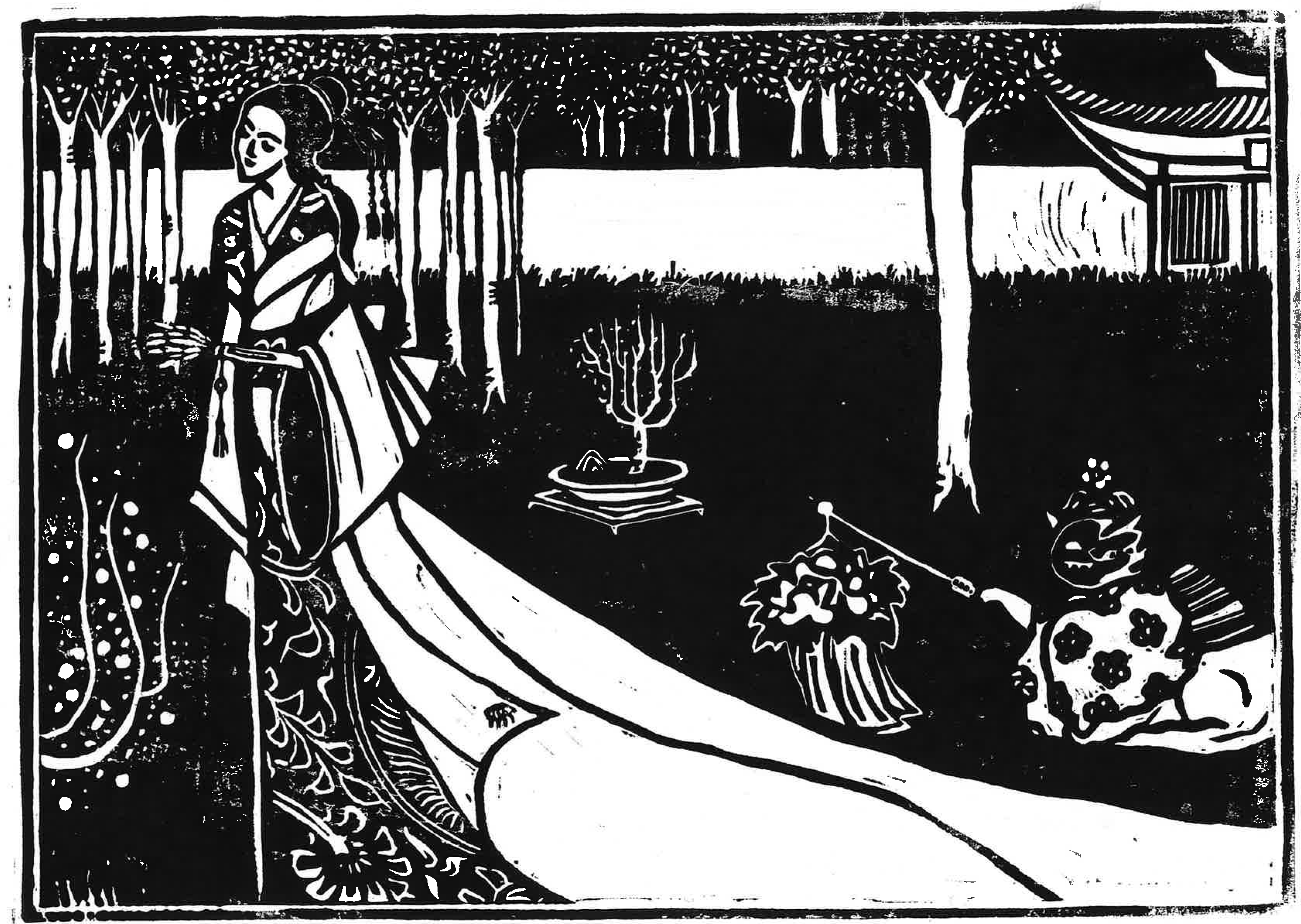
Botan Dōrō is a series of kaidan ghost stories that have circulated in Japan since the 17th century through various media forms, including kabuki and rakugo. The tale’s entry into the world of Japanese literature and art was influenced by the Ming-dynasty Chinese story collection New Tales Under the Lamplight 《剪灯新话》. Botan Dōrō transforms the moral admonitions and Buddhist reflections on karma and desire found in the Chinese source into the realm of Japanese ghost and supernatural narratives.
I first encountered the tale of Botan Dōrō while serving as a teaching assistant for Professor Judith Zeitlin’s course, “Ghosts & the Fantastic in Literature and Film,” in 2023. Profoundly moved by its beauty, I was inspired to reinterpret the story through the medium of print. At the time, I was just beginning to explore the art of printmaking, and this piece emerged through my study and adaptation of Aubrey Beardsley’s aesthetic language, especially composition.
The floral motif on Otsuyu’s kimono is derived from a design I encountered at the Tokyo National Museum, taken from the Kokin Wakashū (Gen’ei-bon), a National Treasure of Japan.
Summary of the Otogi Boko version of the story from wiki:
On the first night of Obon, a beautiful woman and a young girl holding a peony lantern stroll by the house of the widowed samurai Ogiwara Shinnojo. Ogiwara is instantly smitten with the woman, named Otsuyu, and vows an eternal relationship. From that night onward, the woman and the girl visit at dusk, always leaving before dawn. An elderly neighbor, suspicious of the girl, peeks into his home and finds Ogiwara in bed with a skeleton. Consulting a Buddhist priest, Ogiwara finds that he is in danger unless he can resist the woman, and he places a protection charm on his house. The woman is then unable to enter his house, but calls him from outside. Finally, unable to resist, Ogiwara goes out to greet her, and is led back to her house, a grave in a temple. In the morning, Ogiwara’s dead body is found entwined with the woman’s skeleton.
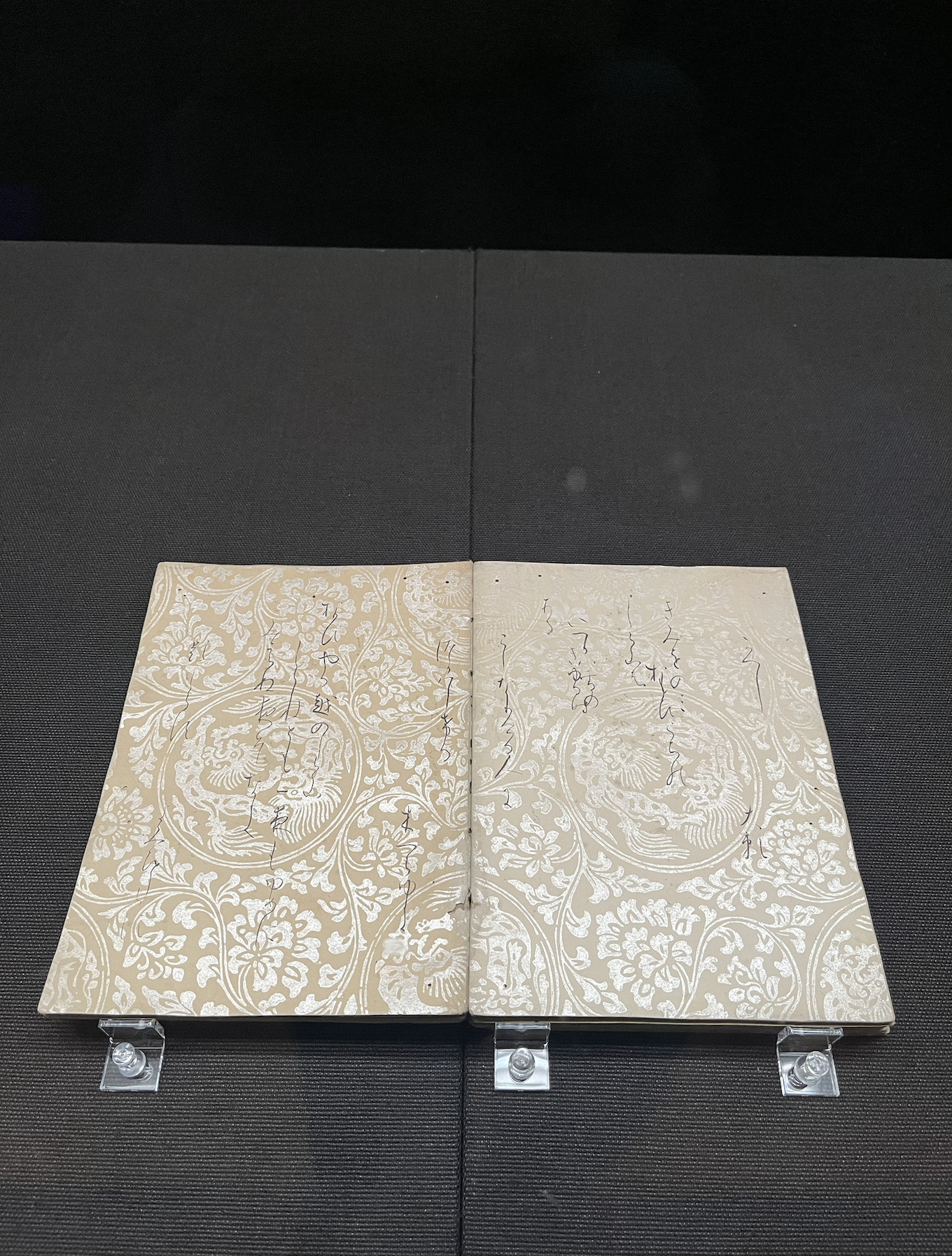
《古今和歌集》(元永本)下帖 東京国立博物館